A procurement-focused guide to sustainable packaging trends 2027: mono-material rigid boxes, moulded pulp and paperboard inserts replacing foam, water-based inks and varnishes, flat-packed collapsible structures, certified and traceable fibre, right-sized shipping protection and evidence-backed claims, with specification tables, a 4-step brief and an FAQ.
Sustainable packaging trends 2027 are already visible in the quotations moving between brands and factories this winter. The direction is not a new colour or a new slogan: it is a shift from describing packaging as "green" to specifying it in grams, millimetres, recycled-content percentages and recyclability routes that a procurement team can audit.
This guide from the DHP Boxes packaging team explains the eight trends most likely to reshape premium paper packaging in 2027, what each one means for structure, substrate, finishing and inserts, and how to brief a supplier so it can be quoted, sampled and inspected.
What Are Sustainable Packaging Trends 2027, in One Paragraph?
They are the practical consequences of regulation, retail audits and consumer scrutiny landing on the same specification sheet. In 2027, sustainable packaging means mono-material rigid boxes, paper-based cradles instead of EVA foam, water-based inks and varnishes, flat-packed collapsible structures that cut freight volume, recycled and FSC-certified fibre with traceable lots, minimal and repulpable decoration, right-sized cartons and truthful, evidence-backed claims.
Mono-material construction
One fibre family per box, from shell board to insert.
Paper cradles instead of foam
Moulded pulp or die-cut paperboard replaces EVA trays.
Water-based inks and varnishes
Print quality without plastic lamination.
Flat-packed structures
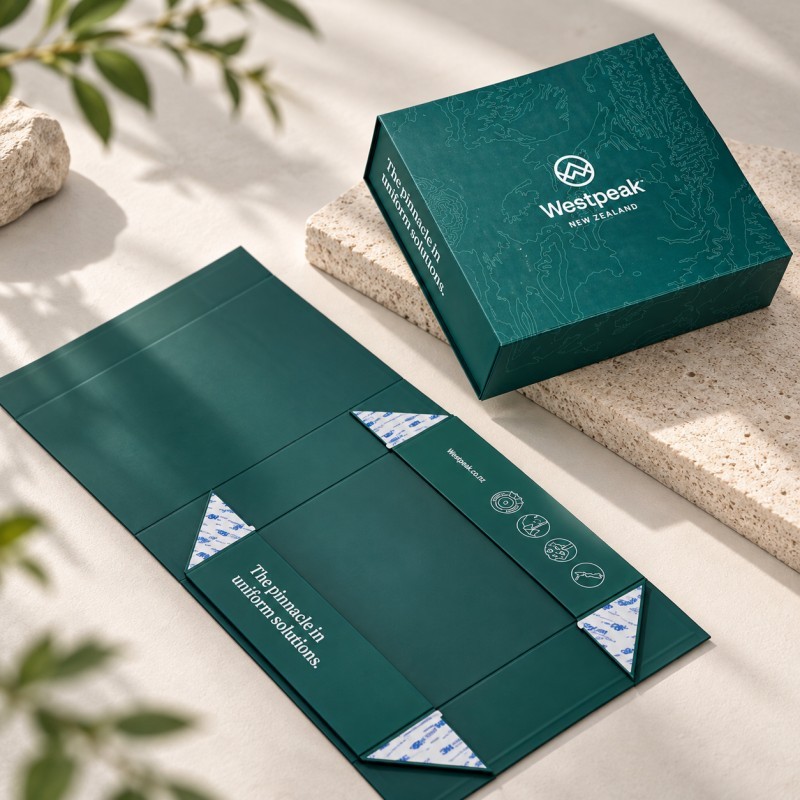
Collapsible rigid boxes cut freight volume.
Traceable, certified fibre
FSC or recycled board with a lot-level reference.
Evidence-backed claims
One precise statement, one document behind it.
None of these is experimental.
Why 2027 Looks Different From 2026
Three forces converge. Extended producer responsibility (EPR) schemes and packaging-waste rules in European markets have moved from consultation to fee schedules, which turns weight and recyclability into line-item costs. Large retailers now run packaging scorecards at onboarding, so an undeclarable component is a commercial risk.
A premium brand can no longer treat sustainability as a separate "eco line": it arrives on the same brief as foil stamping and lid fit. See our guide to sustainable luxury packaging for the specification-level detail behind several of the trends below.
The most requested change is the collapse of multi-material boxes into one fibre family. A box built from recycled grey board, a paper wrap, a paperboard or moulded pulp cradle, water-based glue and a paper belly band enters the paper stream without dismantling.
What disappears: plastic lamination, PVC windows, EVA trays, plastic corner protectors and foam void fill. What remains: the structural confidence of a rigid shell. Solutions now standard in premium work include die-cut aperture covers instead of clear windows, moulded pulp cradles instead of foam, and paper pull tabs instead of ribbon or plastic handles.
Component
2024–2025 default
2027 direction
What the buyer should request
Shell board
Grey board, unspecified origin
Recycled grey board or FSC-certified board
Board type, thickness and certification reference
Outer wrap
C1S art paper under matte lamination
FSC art paper with water-based varnish
Coating system and abrasion test result
Product cradle
EVA foam or PET blister
Moulded pulp, paperboard or corrugated insert
Insert material and recyclability statement
Window
PET or PVC patch
Die-cut reveal or printed substitute
Confirmation that no plastic film is used
Closure
Hidden magnet in foam channel
Magnet in paper channel, or ribbon-free tuck
Magnet removable by hand, disclosed in claim
Trend 2: Fibre Cradles and Inserts Outperform Foam
Inserts were the last place premium packaging hid plastic, because foam forgives tooling tolerance and protects fragile products with little engineering. Moulded pulp — recycled paper fibre pressed into a custom mould — has closed the gap. It grips a bottle, a jar or a watch case, presents a matte crafted surface in photography, and keeps the whole box in one recycling stream.
Die-cut paperboard fitments do the same job for lighter pieces at the lowest weight, and corrugated cradles add shock absorption inside a rigid shell. The trade-off is front-loaded: a pulp mould carries tooling cost and a sample round. Plan an extra week for the first article and treat the insert as a designed component.
Trend 3: Lightweighting Through Structure, Not Thinner Board
The old tactic was dropping a board grade, which lowers stiffness and forces more void fill. The 2027 approach is structural: collapsible rigid boxes ship flat and are formed at the destination, so freight volume falls while the finished box keeps its board weight and hand-feel. Right-sizing follows the same logic — interior dimensions derived from the product plus tolerances remove empty space and the cushioning behind it.
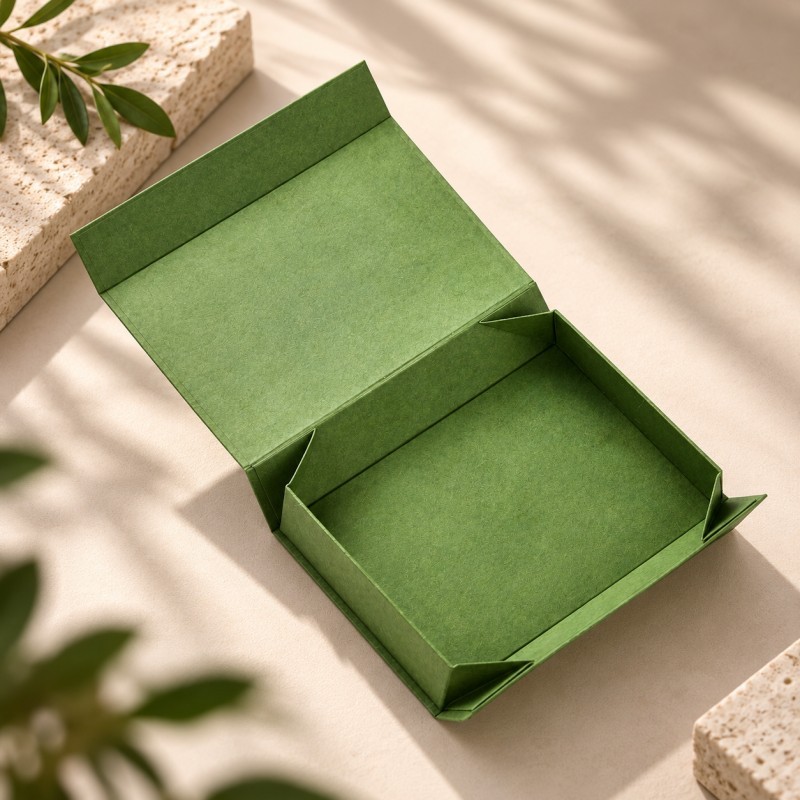
A rigid gift box finished in paper with no plastic film — the construction 2027 briefs are moving toward.
Trend 4: Water-Based Inks and Varnishes Become the Default Finish
Water-based and soy-based inks with matte or gloss water-based varnish now deliver print quality comparable to plastic lamination, and a well-calibrated press holds brand colour across runs without a film. Brands that need extreme softness ask for a textured wrap, and metallic accents are confined to logo-level foil so the fibre stays repulpable. The controlling test is simple: a matte varnish must pass the brand's scuff and rub criteria on the actual substrate, so request the abrasion result with the pre-production sample.
Finish
Luxury effect
Recyclability impact
2027 verdict
Embossing / debossing
Deep tactile signature
None — board deformation only
Preferred
Blind emboss
Quiet, editorial restraint
None
Preferred
Water-based matte varnish
Soft, even surface
Compatible with paper stream
Standard
Foil stamping (logo only)
Metallic precision
Small metal load, accept when scoped
Conditional
Matte lamination
Plastic soft-touch
Locks fibre out of recycling
Declining
Spot UV over film
High-contrast gloss
Mixed material
Avoid
Trend 5: Certification and Chain of Custody Move From Marketing to Evidence
FSC logos are no longer the end of the conversation. Buyers now request the certificate number, the scope and the chain-of-custody reference tied to the actual production lot, because a logo on a box that cannot be traced to a certified purchase is exactly the gap regulators and NGOs look for.
Expect the same rigour for recycled content — a stated percentage backed by a mill declaration — and for adhesive and ink chemistry, where written confirmation replaces a verbal assurance. Keep the documents with the production record so a claim printed on a box can still be evidenced a year later.
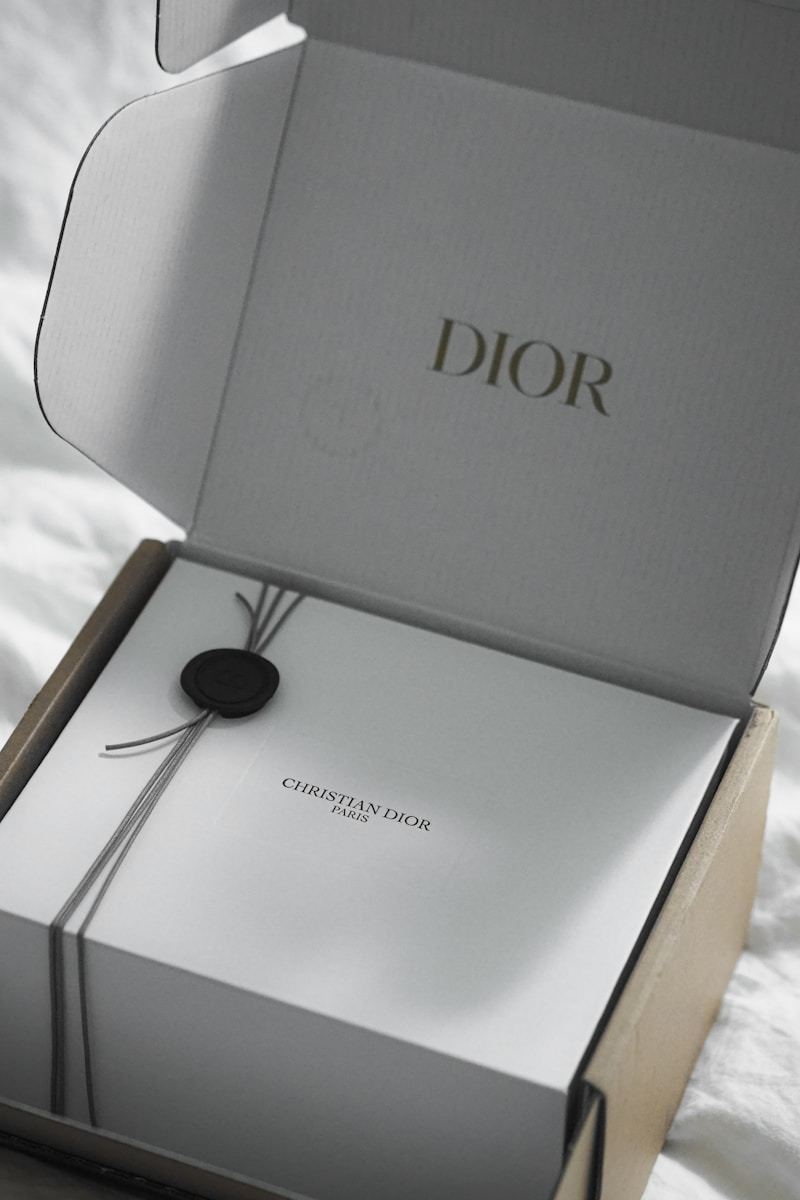
Texture and restraint replace plastic film: a wrap that looks premium and stays in the paper stream.
Trend 6: Reusable and Refillable Formats Get a Reality Check
Reuse is the strongest sustainability argument available to luxury packaging, and the weakest when assumed rather than evidenced. The 2027 brief asks three questions: which second use is plausible, what structure survives it, and what must change for assembly at home. Removable inserts are the usual answer — a cradle that lifts out turns a presentation box into a jewellery or stationery case — and claims must follow evidence, not ambition.
Trend 7: Right-Sized and E-Commerce-Ready Protection
One trend is quietly reshaping premium packaging: the retail box and the shipping pack are being designed together. Single-wall mailers substituted for a rigid box damage a premium product experience and add material; a rigid box in an oversized carton adds void fill and freight.
The 2027 pattern is a two-layer design in which a rigid presentable box fits an engineered corrugated shipper sized to its exact external dimensions, tested by drop and vibration before approval. Packaging that arrives intact is the most sustainable outcome of all, because there is no replacement shipment behind it.
Trend 8: Regulatory Disclosure and Compliance Files
Depending on the market, a brand selling paper packaging in 2027 may need to declare material composition by weight, the recyclability status of each component, absence of hazardous substances in food-contact items, and evidence for every environmental claim printed on the pack. The practical response is a compliance file assembled once per SKU, with each document naming its version and date.
How Do You Turn These Trends Into a 2027 Specification?
A trend only matters when it changes a document the factory works from. These four steps convert market direction into a quotable, inspectable specification.
01
Set the recycling route as an acceptance criterion
Decide whether the box must enter the household paper stream in each target market. That single decision rules out lamination, PVC windows and foam before design starts.
02
Specify material, grade and certification per component
Name the board type and thickness, the recycled-content percentage, the FSC status of each paper, and the ink, varnish and adhesive systems. Ambiguity here becomes a change order later.
03
Design the structure and insert together
Confirm the box type, the cradle material, tolerances and the presentation angle at the same time, then validate protection with a packed drop test on the pre-production sample.
04
Agree the claim and the document behind it
Draft the one sentence you intend to print, list the evidence for each clause, and keep it with the lot record. If a clause cannot be evidenced, remove it.
Which Sustainable Packaging Materials Fit Which Premium Product?
Material choice follows the product's vulnerability and the channel it ships through. The table below is the decision path we use most often in briefs for premium brands.
Product group
Recommended structure
Cradle material
Point to verify
Fragrance and cosmetics
Lid-and-base or magnetic rigid box
Moulded pulp or die-cut paperboard
Surface protection against scuffing on glass
Wine and spirits
Lid-and-base, book-style or two-bottle gift box
Moulded pulp bottle cradle with neck support
Drop test with full bottle weight
Chocolate and confectionery
Rigid box with printed inner lid
Food-contact paperboard tray or corrugated divider
Food-contact declaration, fat and moisture resistance
Jewellery and watches
Book-style or drawer box with removable insert
Fabric-wrapped paperboard over natural fibre
Second-use scenario and lining fibre content
Gift sets and hampers
Collapsible rigid box, flat-packed
Compartmented paperboard or pulp combination
Compartment rigidity and assembly time on arrival
What Does This Mean for Cost and Lead Time in 2027?
Most sustainable choices are material-neutral on price. Water-based inks, FSC board and uncoated wraps quote close to conventional equivalents; embossing costs a one-off die plus a finishing pass; a custom moulded pulp cradle adds tooling and a sample round, but the unit price is usually within a few percent of the foam tray it replaces.
Structure changes the total more than materials. Flat-packed collapsible boxes reduce freight cost enough to offset a slight unit premium, while a smaller right-sized shipper reduces both freight and void fill. Certification and documentation add administrative time rather than production time.
Lead time follows the familiar pattern: sampling first, then production. Standard runs sit around 15–25 working days after pre-production approval, with custom insert tooling adding roughly one to three weeks before production begins. Peak festive capacity fills early, so a 2027 specification should be locked before the summer sampling window.
Seasonal capacity fills early: lock inserts and finishes before the summer sampling window.
Do and Don't: Sustainable Packaging Briefs That Survive an Audit
Do
Don't
Name board type, thickness and certification reference
Write "eco-friendly board" on a specification sheet
State the recycling route and design for it
Laminate a recyclable board and call the box recyclable
Replace foam with a tested pulp or paper cradle
Swap foam for paper without re-running the drop test
Print one precise claim with a document behind it
Use a leaf icon or "green" without evidence
Inspect inserts, glue and colour with ISO 2859-1 AQL sampling
Judge quality only on the pre-production sample
Frequently Asked Questions
Is 2027 the year plastic leaves luxury packaging entirely?
Almost. Foam trays, PVC windows and plastic lamination are being replaced in most premium paper programmes, usually by moulded pulp, die-cut paperboard and water-based finishes. Magnets and a small amount of foil remain common where they perform a function, provided they are disclosed in the claim.
Are sustainable packaging materials more expensive?
Usually not at the material level: FSC board, water-based inks and uncoated wraps price close to conventional options. Cost appears in tooling for custom pulp inserts, in extra finishing passes, and in documentation effort. Structural decisions such as flat-packing typically reduce total landed cost.
What documents should a supplier provide?
The FSC or PEFC certificate with the chain-of-custody reference for the lot, a mill declaration of recycled content, written confirmation of ink and adhesive systems, food-contact declarations where relevant, and inspection reports to an agreed AQL level. Keep them with the production record.
How long does it take to switch an existing box to a sustainable specification?
Typically one sampling round plus production. Material substitution such as water-based varnish is fast; a new moulded pulp cradle adds design and tooling time, often one to three weeks before production. A full structural change such as collapsible construction needs a fresh sampling cycle.
Do these trends apply outside Europe?
Largely yes. EPR fees and packaging rules differ by market, but retail scorecards and customer expectations travel with global brands. North American and Australian buyers increasingly ask for the same declarations, so a single compliance file per SKU saves time across markets.
Final takeaway: how DHP Boxes can help
Sustainable packaging trends 2027 reward precision: one fibre family per box, paper cradles instead of foam, water-based finishes instead of film, flat-packing to cut freight, certified and traceable board, decoration that stays repulpable, right-sized protection and claims that match their evidence. Treat those as specification lines and the design brief becomes quotable, sampleable and auditable.
DHP Boxes is a custom packaging manufacturer with more than two decades of experience producing rigid gift boxes, magnetic boxes, drawer boxes, folding cartons and paper tubes for premium brands worldwide. Our sustainable material work includes paper pulp inserts that replace foam, kraft dividers that replace blister trays, water-based finished boxes that decline plastic lamination, and collapsible structures that ship flat. Programmes are supported with itemised quotations, free samples, ISO 2859-1 AQL inspection and OEM/ODM development. Browse our packaging products, learn more about DHP Boxes, or read related guides on our blog. To map these trends onto your own SKUs, send us your brief.