How to Choose a Custom Packaging Manufacturer in China
- Share
- publisher
- DHP Boxes
- Issue Time
- Nov 11,2026
Summary
A verification-first guide to choosing a custom packaging manufacturer in China: why the factory-or-trader question keeps returning, five checks that reveal who actually makes the box, the audit questions that produce usable answers, four contract clauses that decide a claim, how to convert quotations to landed cost, red flags before the first order, buyer-side mistakes and the first 90 days of checkpoints.
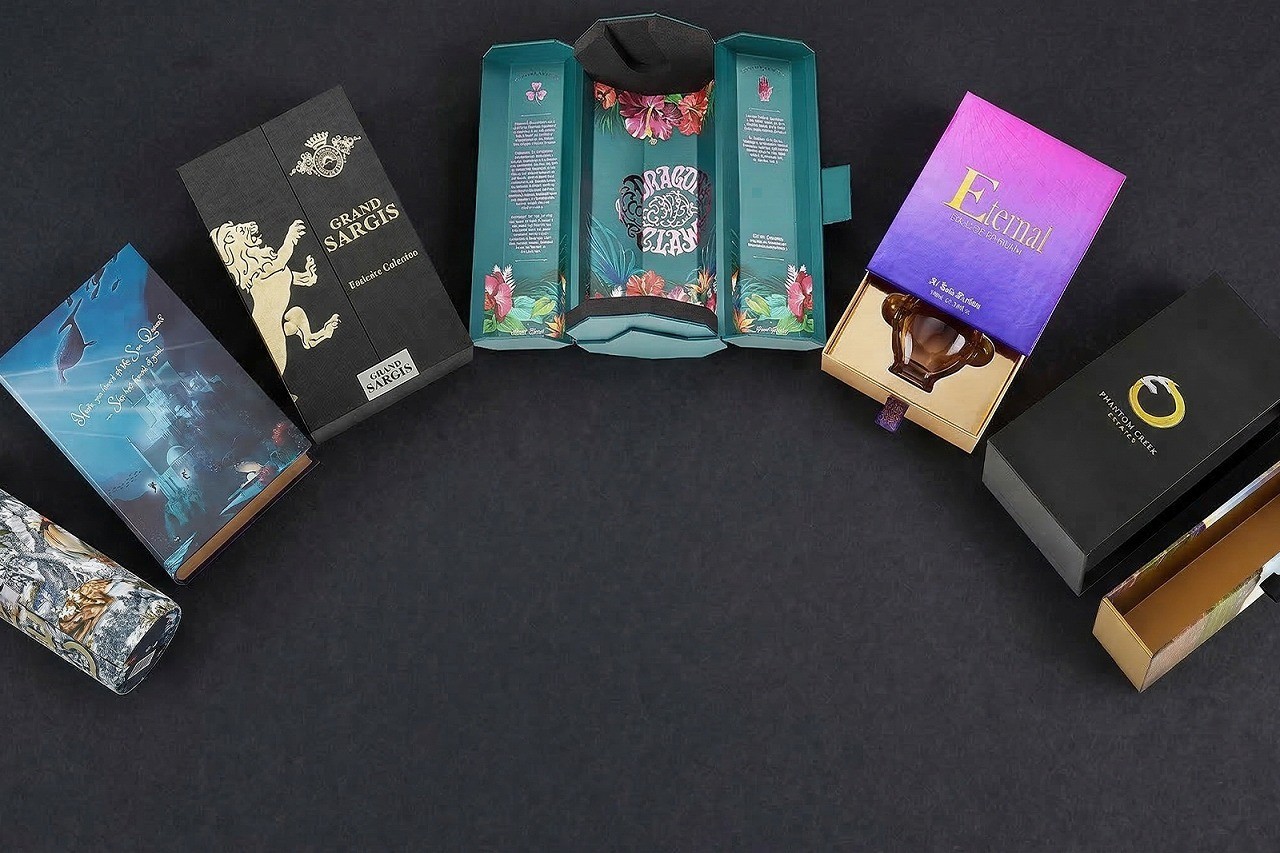
Every packaging buyer has a version of this story. The samples were perfect, the price was the best of four quotes, and the shipment arrived with a wrap colour two shades off, corners lifting and a magnet that barely holds. When the claim was raised, the answer was that the factory had changed — the person who had quoted was an agent, and the agent's factory had subcontracted. That is not bad luck. It is a sourcing decision that was made without verifying who actually makes the box, and without writing the consequences into the order. This guide is about the two things that prevent it: verifying that you are dealing with a real manufacturer, and structuring the contract so responsibility stays with someone who can act. For the business-model comparison between a factory and a trading company, read our factory versus trading company guide. Here we go further: how to audit, what to put in writing, and what to check on a live order. What this guide covers Packaging is a fragmented industry, and most suppliers are honest about what they are. The trouble starts when the distinction is never made — because a buyer who does not know who runs the press cannot tell the difference between a production delay and a lost order, and a supplier who never disclosed the arrangement cannot be held to something it never agreed. The practical consequence is measurable. When something goes wrong, there are three possible answers: the factory fixes it, the intermediary absorbs it, or the buyer does. Only the first two are recoverable, and both depend on a written chain of responsibility that existed before the problem. None of these require a factory visit, although the fifth is stronger if you go. Together they take about an hour and they eliminate most of the ambiguity. Ask, in writing: "Which operations are performed at your facility, and which are subcontracted?" Then ask for the subcontractor's name for each one. A manufacturer answers specifically — printing in-house, foil stamping in-house, magnet insertion by a named partner. A reseller answers vaguely, or not at all. The answer itself matters less than whether an answer exists, because you cannot manage a supply chain you have not been told about. Subcontracting is normal and not a defect. Undisclosed subcontracting is the defect, because it is the point at which your approval of a process stops applying to the product you receive. A factory audit is often conducted as a checklist of equipment, which produces a list of machines and no information. The questions that actually discriminate are about process control: who decides, who signs, and what happens when a result is outside the limit. If the answers are all "yes, we can", the audit has failed. The purpose is not to confirm capability in the abstract, it is to find the two or three places where this supplier's process is weaker than your product needs. The sample clause. Name the approved sample, its date and where it is stored, and state that production must match it. An unsigned sample is an opinion. The inspection clause. State the AQL level per defect class, the lot size, and that the report is a condition of shipment. Our guide to AQL 1.5 versus AQL 4.0 explains how to choose a level. The subcontracting clause. Require written disclosure of any subcontracted process and written approval before a change of subcontractor. The rework clause. Say who pays for rework, who pays for the second inspection, and what happens to freight if the shipment is delayed by a defect. None of these are adversarial. A supplier who can meet them will agree quickly, and the ones who negotiate hardest are telling you something useful. Quotations for the same box routinely differ by thirty percent, and it is almost never margin. The difference is what each quote quietly excludes. Convert every quote to a landed cost before comparing. A quote that names all five is usually the higher number and the lower total. The quote that excludes three of them is cheaper because you are buying the risk separately, later, at a worse price. Most bad supplier outcomes leave traces during the quotation stage. These five are the ones that reliably precede a claim. A quotation that cannot say what it excludes. Ask which of tooling, sampling, inspection and freight are included and watch whether the answer is specific or a reassurance. Vagueness here becomes a dispute later. Pressure to skip the white sample. It is the cheapest step in the process and the one that catches structural errors. A supplier who wants to remove it is optimising their schedule at your risk. Answers that arrive faster than the question deserves. A colour tolerance or an AQL level quoted in seconds without asking about the product is a number copied from a template, not a decision. A sample that is better than the specification. Sometimes the sample is hand-made by an engineer and the run is made on a production line. Ask explicitly: was this sample produced with the production tooling and the production material? No name for the person who signs the inspection report. If nobody owns the result, nobody is accountable for it. Not every failure is the factory's. Three buyer-side habits cause a disproportionate share of packaging disputes, and they are worth checking before raising a claim. Changing the artwork after approval. A late label revision that is sent by email without a new proof has a good chance of being printed from the previous version, or printed from the new one without its colour being approved. Both are the buyer's risk, and both are avoidable with a version number and a signed proof. Approving a sample you did not actually inspect. Samples are often forwarded to a marketing team who look at the print and ignore the fit. Confirm that the person who signed the sample also loaded the product into it. Assuming a tolerance that was never stated. Dimensions on a dieline are nominal. If a box must fit a specific shelf or a specific automated packing line, that constraint has to be written down as a limit, not inferred from a drawing. The habit that prevents all three is the same one that prevents supplier failures: write down what was agreed, in one document, and keep the signed sample where both parties can reach it. Supplier trust is built in the first order or not at all. Three checkpoints make the relationship measurable from the start. Then review it honestly. If the first order ran clean, order a second before expanding the range; if it needed rework, ask what changed and whether it will hold at volume. The pattern in the first two orders predicts the next twenty far better than any presentation. Choosing a custom packaging manufacturer is a verification exercise, not a price comparison. Match the legal entity to the production address, ask which operations are subcontracted, get a specific answer, and write sampling, inspection, subcontracting and rework into the order before the press runs. The cheapest reliable arrangement is not the lowest quote. It is the one where responsibility is traceable to a party that can act — and where you found that out before the shipment, not after it. No. A trading company can be the better choice when you need many product categories, consolidated purchasing or help with logistics and compliance. The requirement is the same either way: the manufacturing chain must be disclosed and the responsibility must be written down. Compare the business licence entity with the invoice and contract, ask for the plant address, request a live video walk-through of the specific production lines, and check that certifications name the same company. For significant orders, add a third-party audit or a visit. Name the approved sample and its date, state the AQL level per defect class and the lot size, require the inspection report as a condition of shipment, and define who pays for rework and the second inspection. Not by itself — most factories subcontract specialised finishing. Undisclosed subcontracting is the red flag, because it is where your process approval stops applying. Require written disclosure and approval before any change of subcontractor. Three is enough, provided you convert each to landed cost including tooling, sampling, inspection, freight and rework terms. More quotes rarely add information; the exclusion list in each quote usually does. Ready to check a supplier against a written standard? Send us the project and we will share the verification checklist we use: contact the DHP Boxes team.
Why The Question Keeps Coming Back
Scenario
Reseller with no written chain
Factory or disclosed chain
Colour off the approved sample
Rejected as "within tolerance" with no recourse
Rework or reprint against a signed sample
Late shipment
Blamed on the factory; no schedule visibility
Production schedule agreed and reported
Insert does not fit the bottle
Insert tooling redone at buyer's cost
Tooling owned by the party that specified it
Subcontracted finishing fails
Emerges only after the claim
Disclosed in advance, covered by the same terms
Five Checks That Reveal Who Makes The Box
The one question that works
The Audit Questions Worth Asking
Area
Question
A good answer sounds like
Structure
Who draws the dieline, and can I see a recent one?
A named in-house engineer and a drawing with tolerances
Colour
What light source and tolerance do you approve colour under?
A standard illuminant and a Delta E limit
Material
How do you verify board grammage on arrival?
A measured check with a recorded value per lot
Quality
What AQL do you inspect to, and who signs the report?
A stated level per defect class and a named inspector
Capacity
What else is running in the same week as my order?
A schedule, not a reassurance
Rework
Who pays when the first article fails?
A clause that already exists in the contract
Writing Responsibility Into The Order

The four clauses that decide a claim
Reading A Quotation So The Cheap One Stops Looking Cheap
Line
Often excluded
Ask for
Tooling
Die, insert mould, foil block
Itemised tooling cost and ownership
Sampling
White sample, printed sample, courier
Number of samples included
Inspection
Final inspection, third-party audit
Who inspects and to what level
Freight
Export carton, pallet, forwarder fees
Quote basis: EXW, FOB, DDP
Risk
Replacement of a failed run
Rework and replacement terms
Red Flags That Surface Before The First Order
Signals worth acting on
When The Supplier Is Right And You Are The Problem
The First Ninety Days
Final takeaway
FAQ
Is it always better to buy directly from a factory?
How do I verify a Chinese packaging manufacturer before ordering?
What should the purchase order say about quality?
Is subcontracting a red flag?
How many quotes should I collect?