How Much Does Custom Packaging Cost? A Manufacturer's Guide
- Share
- publisher
- DHP Boxes
- Issue Time
- Oct 7,2026
Summary
Learn practical insights about custom packaging cost - structures, materials, printing, finishing, MOQ and lead time, and how to reduce cost without sacrificing quality on a premium box.
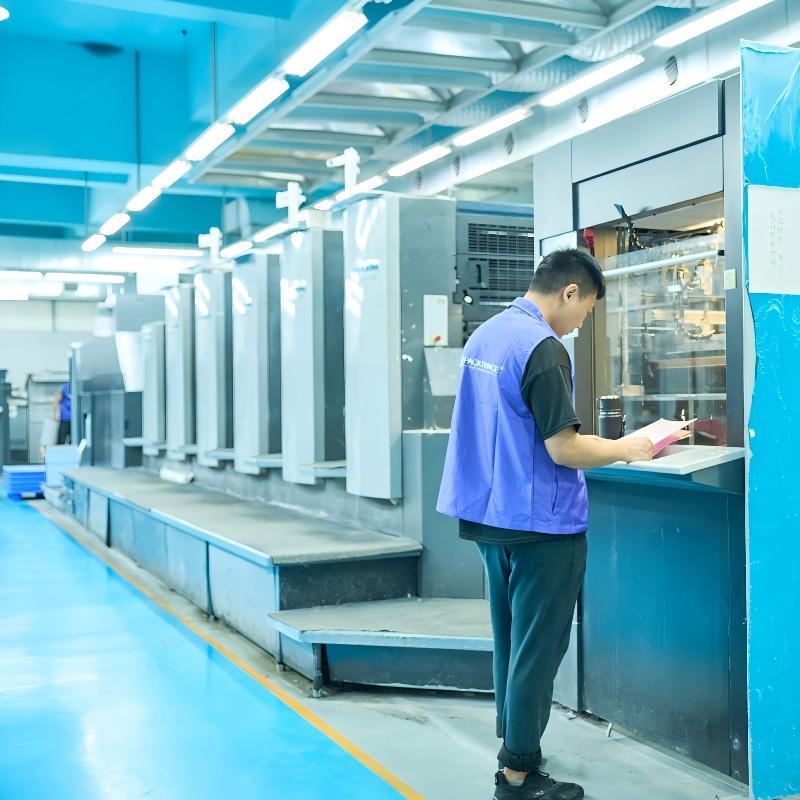
Custom packaging cost is the total price a brand pays for a box engineered to its own dimensions, artwork and finishes — driven by structure, materials, printing, finishing, inserts, order quantity and lead time, not by a single headline figure. Because no two boxes are identical, the honest answer to "how much does custom packaging cost" is a range with clear levers, not one number. In this manufacturer's guide, the DHP Boxes team breaks down exactly what moves the price up or down, how a quotation is built, and how procurement managers and importers can reduce cost without sacrificing quality.
Why Custom Packaging Cost Is Never a Single Number
A commodity carton can be priced per thousand off a catalogue. Custom packaging cannot, because the price is a function of decisions the buyer controls: the structure, the board weight, the print method, the finishing passes, the insert and the run length. Two boxes of the same outer size can differ several times in cost if one is a folding carton in C1S art paper and the other is a rigid magnetic box with foil stamping and a molded insert.
That is good news for buyers. It means cost is negotiable through design choices, and a manufacturer who explains the levers is more useful than one who simply quotes a number. The sections below work through each lever in the order it affects a quotation, from the structure and material through printing, finishing, inserts, quantity and lead time, and close with practical ways to reduce cost without eroding the quality a premium product demands.
Key Cost Drivers Before You Request a Quote
Before a factory can price a project, it needs a complete brief. These are the inputs that most change the number.
- Structure and size: a folding box, a rigid box and a magnetic box are assembled differently, and larger blanks use more board and more machine time.
- Material grade: grey board, C1S or C2S art paper, kraft, corrugated and fancy papers each carry a different price per sheet.
- Print and finishing: offset versus digital, plus foil, emboss, spot UV, lamination and silk screen, each add a pass and a cost.
- Insert: a paperboard insert, a molded pulp cradle and an EVA foam insert sit at very different price points.
- Quantity and minimum order quantity (MOQ): setup costs are spread over the run, so unit cost falls as volume rises.
- Lead time: standard production is cheaper than a compressed, priority schedule.
- Freight and packing: pack-out method, carton size and shipping terms change the landed cost even when the ex-works box price is unchanged.
How Box Structure and Material Affect Price
Structure decides how much material and labour a box consumes, so it is the first lever to examine.
| Structure | Material profile | Cost position |
|---|---|---|
| Folding carton | C1S / C2S art board, one glued seam | Lowest — machine-folded, light |
| Rigid lid-and-base box | Grey board shell plus wrapped cover | Mid — partly hand-assembled |
| Magnetic closure box | Rigid shell plus magnets | Mid–high — hardware and assembly |
| Multi-piece set / drawer box | Multiple shells, trays and dividers | High — more parts and labour |
| Eco mailer / corrugated box | Corrugated flute or kraft liner | Low–mid — lighter and recyclable |
Board weight is the second material lever. Heavier grey board and thicker art paper raise both strength and price, so we right-size the board to the protection the product actually needs. FSC-certified and recycled papers are now widely available and do not automatically carry a premium, so a sustainable choice is often cost-neutral.
Print and finishing passes add up
Each finishing step — foil stamping, embossing, spot UV, lamination — needs its own setup and machine pass. Two restrained finishes usually beat four competing ones on both cost and looks, so we help buyers choose the one effect their customer will actually feel.
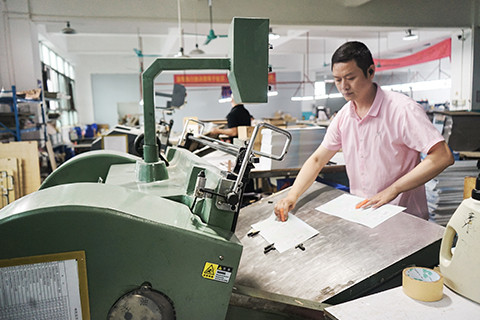
How Quantity, MOQ and Lead Time Change the Unit Price
The single biggest per-unit saving in custom packaging comes from volume, because fixed costs — structure development, die-making, plate-making and press setup — are spread across the run.
| Cost element | Behaviour | Buyer action |
|---|---|---|
| Die and plate making | Fixed, one-time per design | Amortise across a larger first run |
| Press and finishing setup | Fixed per run | Consolidate sizes and SKUs per run |
| Materials | Variable per unit, with quantity discounts | Confirm board grade against protection needs |
| Labour and assembly | Variable, higher for rigid and hand-finished boxes | Simplify parts where the design allows |
| Rush surcharge | Added for compressed schedules | Plan lead time instead of paying to compress it |
Minimum order quantity exists because small runs cannot absorb those fixed costs. A reasonable MOQ depends on structure and finishing, so ask for the exact figure for your design rather than assuming one blanket number applies to every box.
Offset vs Digital Printing: A Cost Comparison
Printing method is a common source of unnecessary cost, because the cheapest method depends entirely on run length and how many designs share the press.
| Print method | Best for | Cost behaviour |
|---|---|---|
| Offset (litho) | Large runs, consistent colour | High setup, low unit cost at volume |
| Digital | Short runs, many variants, prototypes | Low setup, higher unit cost |
| Silk screen | Single-colour coverage on panels | Durable, economical for one colour |
| Flexo | Corrugated mailers and shippers | Efficient for large, simple board runs |
For a short, varied order, digital printing avoids plate costs that would never amortise. For a large, single-design run, offset spreads its setup across enough units to win on unit price. Matching the method to the run is one of the simplest savings a buyer can make.
Where the Money Goes: Inside a Custom Packaging Quotation
A transparent quotation separates the cost of each stage. Understanding the stages helps buyers challenge a price intelligently instead of simply asking for a discount.
- 01 — Structure and tooling: structure development, die lines and any custom die or plate needed for the design.
- 02 — Materials: board, wrap paper, magnet, ribbon and insert material costed per unit at your quantity.
- 03 — Printing and finishing: press setup and running, plus each finishing pass such as foil, emboss, spot UV and lamination.
- 04 — Assembly, QC and packing: wrapping, gluing, insert fitting, in-line quality control, pack-out and freight preparation.
Automation lowers unit cost
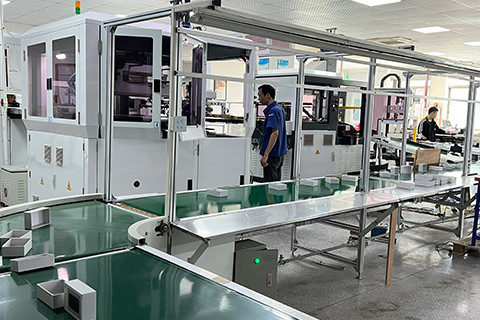
An in-house line that combines printing, die-cutting, gluing and automatic box production reduces handling, scrap and coordination between vendors. This is one reason factory-direct pricing is usually lower than buying through a trading company that sub-contracts several stages.
Design Do's and Don'ts for Cost-Efficient Custom Packaging
Cost control is a design discipline. The best savings come from smart choices, not from cutting quality where the customer notices.
Do
- Right-size the box and the board to the product.
- Keep one hero finish the customer will feel.
- Consolidate sizes and SKUs to amortise setup.
- Confirm the MOQ and lead time before finalising the design.
Don't
- Thin the board to save cents — it reads as discount on shelf.
- Add finishing passes that never reach the customer.
- Split one order across many small runs and pay setup repeatedly.
- Pay rush surcharges instead of planning realistic lead time.
How to Reduce Custom Packaging Cost Without Losing Quality
Buyers rarely want the cheapest box; they want the best value for the price point. These are the levers we recommend most often.
- Spend where it shows: put budget into the surface a customer touches and save on unseen secondary layers.
- Standardise sizes: reusing one structure across several SKUs spreads tooling and setup across more volume.
- Choose the right print method: digital suits short, varied runs; offset suits large runs where plate costs amortise.
- Match the insert to the protection: a paperboard or pulp insert often protects as well as foam at lower cost.
- Plan the schedule: a realistic lead time avoids rush surcharges entirely.
- Buy factory-direct: sourcing from a custom packaging manufacturer with an in-house line removes markup from sub-contracted stages.
Quality Control and Why Cheap Can Cost More
The lowest quote is not always the cheapest outcome. Poor QC produces defects — misprints, colour shift, glue marks, cracked folds, wrong die-cutting, missing glue or poorly formed corners — that lead to rework, chargebacks or a late launch. A factory that runs in-line inspection and sampling against a defined standard protects the buyer's schedule and reputation.
When you evaluate a supplier, ask which QC stages are included, what standard governs batch inspection, and who signs off the pre-production sample. A clear approval trail is the cheapest insurance against a costly surprise, and a supplier who explains quality in concrete terms is usually a safer long-term partner than one competing only on headline price.
Factory-direct pricing
Working directly with the factory that owns the printing, die-cutting, gluing and assembly line removes the markup a trading company adds when it sub-contracts those stages. It also shortens communication, which protects the schedule buyers care about most.
How DHP Boxes Can Help With Your Packaging Costing
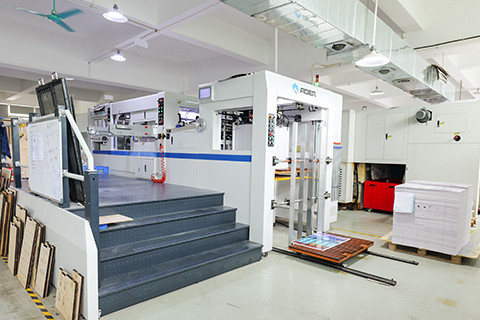
DHP Boxes is the brand of Dongguan Donghong Paper Products Co., Ltd., a factory with more than 20 years of experience producing high-end custom paper packaging for wine and spirits, fragrance and cosmetics, jewelry, watches, chocolate and other premium goods. Our team helps buyers cost a project properly — structure development, materials, printing and finishing, inserts, sampling and quality control — with in-house production, OEM and ODM support, custom molded inserts and FSC-certified materials.
To get a real number for your project, explore our custom packaging products, read more in our packaging blog, or send us your box size, structure and quantity for a transparent, stage-by-stage quotation. You can also learn more about our factory and how we work.
Custom Packaging Cost — Frequently Asked Questions
How much does custom packaging cost per box?
There is no single figure. Price depends on structure, material grade, printing and finishing, insert type, quantity and lead time. A folding carton is far cheaper than a magnetic rigid box with foil stamping; ask a manufacturer for a stage-by-stage quote based on your own design and quantity.
What is the minimum order quantity for custom packaging?
It varies with structure and finishing, because fixed setup costs must be spread across the run. Small premium runs are possible, but unit cost falls as volume rises. Confirm the exact MOQ with your supplier for your chosen design.
What is the cheapest way to make custom packaging look premium?
Focus budget on the surface the customer touches: a good board, one well-chosen finish such as matte lamination or a single foil stamp, and a fitted insert. Restraint usually looks more expensive than several cheap finishing passes.
Does custom packaging cost more if I order in small batches?
Unit cost is higher on small runs because die, plate and press setup are spread across fewer boxes. If you need small quantities, ask your supplier how to reuse a structure or consolidate orders to bring cost down without compromising the design.
Final Takeaway
Custom packaging cost is not a mystery — it is the sum of structure, material, print, finishing, insert, quantity and lead time, each of which the buyer can influence. Spend on the parts the customer sees and feels, standardise sizes to amortise setup, choose the right print method for the run length, and plan a realistic schedule instead of paying rush surcharges. Then get a transparent, stage-by-stage quote from a factory that owns the whole process. When you are ready to price a real project, the team at DHP Boxes is ready to help.