Eco-Friendly Christmas Gift Boxes: Sustainable Packaging Ideas
- Share
- publisher
- DHP Boxes
- Issue Time
- Sep 23,2026
Summary
Eco-friendly Christmas gift boxes explained: FSC and recycled boards, plastic-free moulded pulp and paperboard inserts, water-based inks and glues, flat-packed freight savings, sampling, MOQ, lead time and AQL quality control from DHP Boxes.
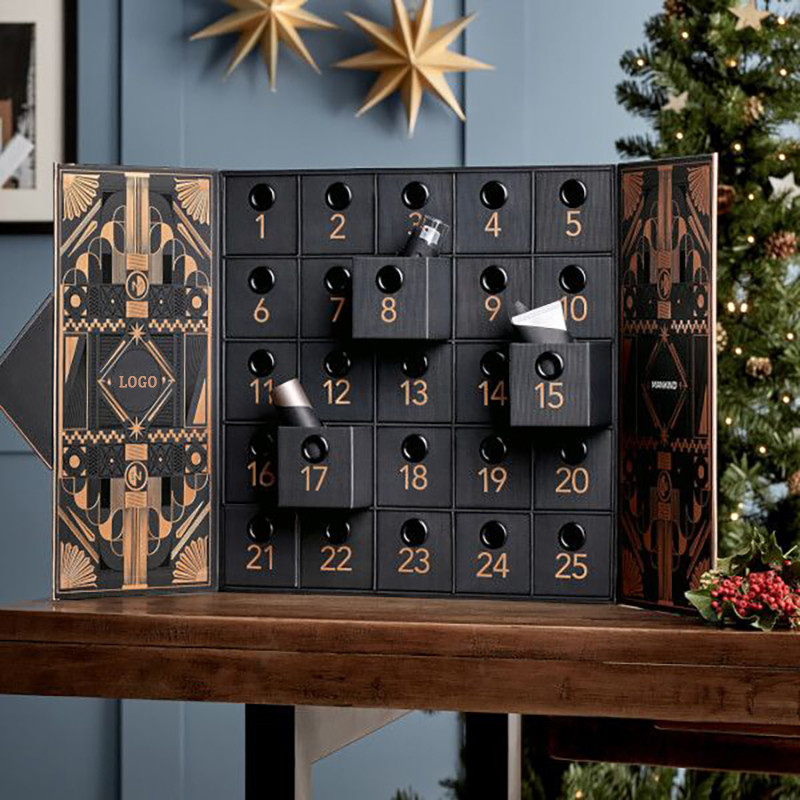
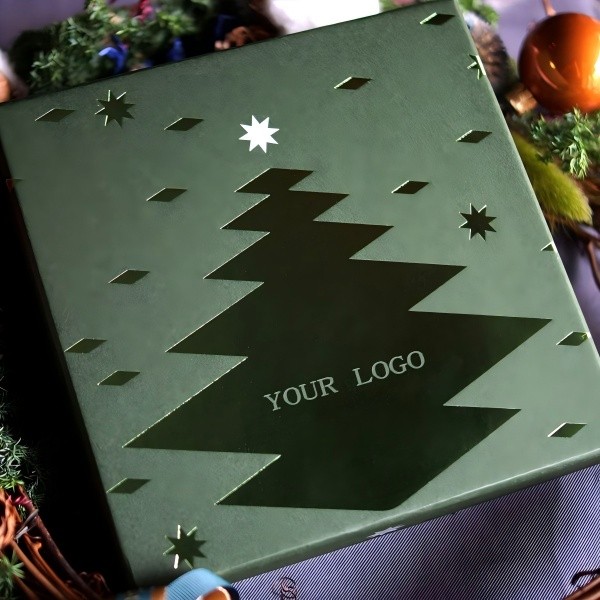
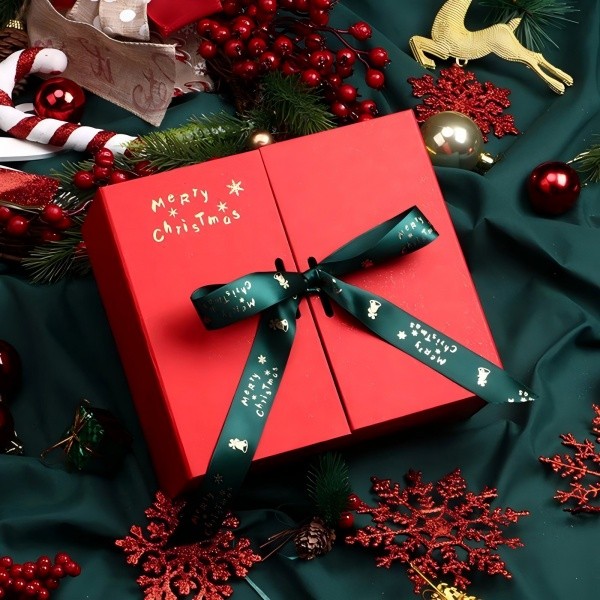
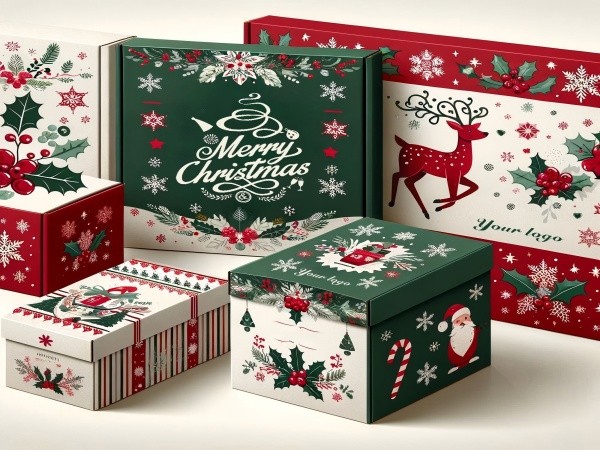
Eco-friendly Christmas gift boxes are festive packs engineered so that every layer of the box — board, wrap, ink, adhesive, insert and closure — can be recycled, composted or reused without losing the premium feel that a seasonal gift demands. It is not a single "green" material stuck onto an existing design; it is a set of swaps made at the specification stage, before the first sample is cut. In this guide the packaging team at DHP Boxes explains which substrates and finishes genuinely lower a box's environmental load, which ones only look sustainable, how to replace plastic inserts with moulded pulp and paperboard fitments, and what European buyers should ask a custom packaging supplier about FSC chain of custody, MOQ, lead time and sampling. By the end you will be able to write a brief for eco friendly christmas gift boxes that is both credible and manufacturable. The short answer is that eco friendly christmas gift boxes are made from responsibly sourced fibre, decorated with the least material necessary, and can be separated again at the end of the season without tools. In practice that means three tests: Sustainability is a spectrum, not a badge. Buyers who treat it as a specification — measurable, sampled and validated — get a better box than buyers who treat it as a marketing line. The commercial case is real as well. Paper-based inserts weigh less than foam, and moulded pulp nests tighter than EVA, so sustainable packs are frequently cheaper to ship. Buyers who model the whole landed cost rather than the unit price often find the eco route is not a premium. Material choice drives most of the environmental outcome. The table below compares the substrates we spec most often for festive ranges, with honest notes on where each one falls short. A common mistake is to pair a genuinely recyclable board with a plastic lamination, which locks the fibre out of the paper stream. Where a soft-touch hand-feel is required, we test matte water-based varnish or an uncoated textured wrap instead, then confirm scuff resistance with an abrasion test on the sample. Sustainable does not imply plain. The structures that work best for eco friendly christmas gift boxes are the ones with fewer parts and a clear opening sequence. Folding and collapsible rigid boxes ship flat, so a container carries far more units than with assembled rigid boxes — an easy win on freight emissions. Lid and base boxes with a paperboard collar give the weight of a luxury pack without a foam fitment. Drawer boxes and matchbox slides can be built entirely from board if the pull is a die-cut paper tab rather than a ribbon and magnet. Advent calendar boxes are the format where paper-based trays now replace plastic almost completely. Where a client wants a magnetic closure for the snap, we suggest recessed magnets and a clearly marked separation point, so the end user can still recycle the fibre board separately. It is a small design decision that decides whether the box is recyclable in practice or only in theory. The insert is usually where a “green” box quietly fails. Foam and vacuum-formed plastic trays are light and cheap, but they contaminate the paper stream and are rarely reused. The alternatives now perform well enough for premium gifting: For fragile contents, we normally combine a die-cut paperboard fitment with a corrugated cradle rather than reaching for EVA foam, then verify protection with a drop test on the packed sample. Where a client insists on foam for a high-value item, we ask them to print a separation instruction inside the lid, so the end user can recycle the board cleanly. Decoration is the least visible and most decisive layer. The finishes that hold up under scrutiny are water-based varnish, matte water-based coating, embossing and debossing, and foil only where it can be kept to a single small accent. The finishes that undo the effort are full-surface plastic lamination, heavy spot UV over film, and solvent-based adhesives that make fibre separation impractical. Ink choice matters too. Water-based and soy-based inks are the practical default for food-adjacent products such as chocolate and tea; heavy metallic inks are harder to de-ink and should be confined to small areas. Glue is the quiet one: a water-based adhesive designed for repulpability keeps the whole box in one recycling stream, whereas a hot-melt formulated for extreme bond strength may not. Prefer one tactile effect over two visual ones, keep foil coverage small and away from fold lines, and specify the adhesive by its recycling behaviour rather than its bond strength alone. Buyers are now auditing claims, so the language on the box has to match the paperwork behind it. A practical way to separate the two: Genuine signals Warning signs Our advice to brands is to publish one precise claim rather than three vague ones. "FSC-certified board with a moulded pulp insert, recyclable in the paper stream" is more persuasive than a leaf icon, and it will survive a buyer's questions. A good brief shortens the sampling cycle. Send the product with its weight and dimensions, the retail channel, the target market and its packaging rules, the quantity band, the delivery date, and any certification the brand already holds. Say explicitly which parts must be plastic-free and which are negotiable. Ask for the board grade, the recycled percentage, the wrap, the ink system, the adhesive and the insert specification in writing — if a supplier will not name the materials, the eco claim has no foundation. For a European festive range we usually quote three options: a fully paper-based box, a paper box with a fabric-lined tray for the premium SKU, and a flat-packed folding version for e-commerce. The buyer can then see the cost and carbon difference side by side instead of guessing. The sequence below is how a sustainable festive order moves through our plant, and it is the same for a 500-piece trial and a 50,000-piece seasonal run. Brief and material selection Structure, board grade, recycled content and insert concept agreed against the retail channel and the brand's certification. Structural sample and dieline A white sample proves fit, board thickness, closure and nestability before any artwork is applied. Printing and finishing trial Water-based inks and varnish trialled on the chosen stock, with foil coverage and emboss placement checked on the printed sheet. Pre-production sample approval Final sample checked for colour, scuff resistance, insert fit and drop performance; both sides sign off before tooling. Production and AQL inspection Mass production with AQL sampling, monitored for crease, delamination, misregistration and glue marks before packing. Flat packing and dispatch Boxes nested or shipped flat where the structure allows, reducing container volume and freight emissions. Eco materials behave differently on press and on the packing line, so the inspection list changes. Uncoated and recycled stocks scuff more easily, recycled board can vary slightly in shade between lots, and paper-based inserts are less forgiving of tooling tolerance than moulded plastic. We inspect against ISO 2859-1 AQL, focusing on the defects that matter for a festive range: colour shift between batches, poor coating or varnish streaks, scratches and scuffs, crease and cracked folds, glue marks, wrong die cutting, and insert fit. Where a brand makes a recyclability claim, we keep the material and adhesive declarations on file against the production lot, so the claim can be evidenced long after the season closes. Sustainable construction is usually material-neutral on price and occasionally cheaper, because paper inserts and flat packing reduce weight and volume. The variables that move the quote are far more conventional: structure complexity, number of finishing passes, insert tooling, and total quantity. Because the festive window is unforgiving, our standing advice is to lock the eco specification by late summer. Changing board grade or insert type after tooling is where both cost and delay accumulate. Ask for the FSC or PEFC certificate and the chain-of-custody reference for the actual board purchased, not a general company certificate, plus a mill declaration stating recycled content percentage. Inks and adhesives should be declared as water-based, food-adjacent gifts such as chocolate and tea need confirmation of food-contact compliance, and any compostable or recyclable claim printed on the pack should name the standard it rests on. A supplier who keeps this documentation ready can support a brand through a retail packaging audit. Not necessarily. Paper-based inserts, uncoated board and flat packing often cost the same or less than foam and laminate once freight is included. Cost rises mainly with structural complexity and custom tooling, not with the sustainability choice itself. Yes. Tactile finishes carry luxury better than heavy gloss: an embossed monogram, a textured or pearl wrap, a soft-touch water-based varnish and a well-engineered opening sequence. The felt experience matters more than the material label. It depends on the structure and whether custom insert tooling is required. Typical projects start in the low hundreds and most volume programmes sit around 500–1,000 pieces per SKU. We confirm the exact floor once the structure and stock are fixed. Allow roughly 15–25 working days after sample approval, plus freight. November capacity fills early, so a specification agreed in late summer is the safest way to protect a December delivery date. We provide a free white sample so a buyer can check structure, board thickness and fit before committing. Printed and tooling-backed samples carry a cost, credited against the production order. Yes. We build fully paper-based packs using FSC board, water-based inks and adhesives, moulded pulp or die-cut paperboard inserts and paper closure tabs. Where a magnet is essential we recess it and mark the separation point, so the fibre can still be recycled. Eco-friendly christmas gift boxes are a specification exercise, not a slogan. Decide the recycling route first, choose board and wrap to match it, replace foam with moulded pulp or die-cut paperboard, keep finishing to water-based systems, and evidence every claim with a certificate or a declaration. Done that way, a sustainable festive box looks and feels more premium than the laminated alternative it replaces. DHP Boxes is a packaging manufacturer working with FSC-certified and recycled boards, paper-based inserts, water-based inks and adhesives, and full OEM/ODM support from structural sample to AQL-inspected production. We can quote a fully paper-based version, a premium fabric-lined tier and a flat-packed e-commerce version of the same design so the trade-offs are visible before you commit. Learn more about DHP Boxes, browse our packaging products, read further festive guides on our blog, or send us an inquiry with your product details, structure, quantity and target delivery date.What Makes a Christmas Gift Box Eco-Friendly?
Materials for Eco-Friendly Christmas Gift Boxes
Substrate
Typical Use
Eco Profile
FSC-certified grey board / chipboard
Rigid box shells, lid and base, drawer boxes
High recycled content, readily recyclable; heavier than folding board so freight counts
Recycled kraft and M/G white kraft
Wraps, folding boxes, mailers, belly bands
Unbleached fibre, low chemical load, strong recyclability; limited colour range
Uncoated board
Minimal "paper-look" packs, book-style boxes
No plastic film, easy to recycle; needs careful handling to resist scuffing
Textured and pearl paper
Fancy paper wraps on premium tiers
Hand-feel without lamination; check fibre and coating origin with the mill
Corrugated / flute paper
Transit shippers, e-commerce outer boxes
Excellent strength-to-weight ratio, widely recycled; not always premium-looking alone
Eco-Friendly Box Structures That Still Feel Luxurious
Plastic-Free Inserts, Dividers and Protection
Insert Option
Best For
Notes
Moulded pulp insert
Bottles, jars, cosmetics, heavier gift sets
Made from recycled fibre, nests for shipping; tooling cost amortised at volume
Die-cut paperboard fitment
Multi-piece gift sets, confectionery, small accessories
No tooling, recyclable with the box, keeps retail weight low
Corrugated cradle
Transit protection inside a rigid shell
Excellent shock absorption, FSC board available
Fabric or velvet-touch paperboard tray
Luxury positioning where fabric is required
Choose natural fibres and paper-backed lining; avoid PVC
Kraft tissue and butter paper
Wrapping, void fill, presentation layers
Plastic-free tissue and recycled kraft tissue both viable
Finishing, Inks and Adhesives: Where Green Claims Are Won or Lost
Greenwashing vs Genuine Sustainability in Festive Packaging
How to Brief a Sustainable Packaging Manufacturer
Factory Process: From Eco Brief to Delivered Christmas Range
Quality Control for Sustainable Gift Boxes
Cost, MOQ and Lead Time for Eco-Friendly Christmas Boxes
Factor
Typical Range
What Changes the Number
MOQ
From a few hundred to around 1,000 pieces
Structure, board grade, whether custom insert tooling is needed
Sampling
Free white sample; tooling-backed sample charged
Number of revisions, custom pulp or die-cut tooling
Lead time
About 15–25 working days after sample approval
Peak-season loading in September–November, finishing complexity
Freight saving
Meaningful on flat-packed and nested packs
Container fill rate, pallet configuration, shipping mode
Certifications and Documentation Buyers Should Ask For
Frequently Asked Questions
Are eco-friendly Christmas gift boxes more expensive?
Can a sustainable gift box still look luxurious?
What is the minimum order quantity for eco-friendly Christmas boxes?
How long does production take before Christmas?
Do you provide free samples?
Can you supply fully plastic-free packaging?
Final Takeaway: How DHP Boxes Can Help